ISCAR's invention of the MULTI-MASTER tool line has had a significant impact on the world of cutting tools at the turn of the last century. The three-pronged principle of the MULTI-MASTER family was based on the face contact between a carbide head and tool, centering the head by use of a short taper, and securing the head in the tool body by use of a threaded connection. It was the last of these three elements that benchmarked the connection of carbide heads in assembled tools. The successful design of the thread, made of hard brittle carbide, enabled fast and simple head replacements, and created the easy-to-use tool that features ISCAR's no setup time phenomenon. The threaded connection quickly found its way into various tool assembly systems with exchangeable carbide heads, now an industry standard.
At first, the MULTI-MASTER line was intended specifically for milling in the Die and Mold industry. Soon after, the automotive, aerospace, and general machinery industries adopted ISCAR's MULTI-MASTER in their production processes. Milling remains the focus of the MULTI-MASTER line, which now lends itself to drilling applications as well. The MULTI-MASTER line has greatly expanded, and now covers a broad range of applications that include drilling, countersinking, and chamfering hole edges. When looking back more than two decades, it is apparent that the MULTI-MASTER line found its way into the holemaking sector of applications by providing highly effective solutions.
There are two types of heads which create the cutting section of the MULTI-MASTER tool. The first type is similar in its shape to a multi-flute solid carbide tool but differs in the overall and cutting-edge lengths. Increasing the number of flutes on the cutting head makes cutting more stable and productive. The heads of the first type are produced from stepped cylindrical blanks by use of a grinding operation. The heads of the second type are shaped beforehand by pressing and sintering with a minimal oversize. Additional grinding defines the final shape of the MULTI-MASTER head and its accuracy. The heads of this type have only two flutes characterized by high strength. This facilitates increased feeds per tooth in comparison with the heads of the first type. Pressing technology enables the production of diverse complicated MULTI-MASTER geometric shapes.
The head is mounted on a holder that may be an integral body (shank) or an assembly comprised of a shank, extension, and reducer. The holder is a rotating solid tool with cylindrical and conical sections without flutes that allow the evacuation of chips. MULTI-MASTER drilling heads are suitable for relatively shallow holes. This may pose a limit in holemaking applications, yet for short-hole drilling when the shape of a part or a work-holding fixture requires high tool overhang, a MULTI-MASTER long-reach tool is more rigid compared to a typical drill with flutes.
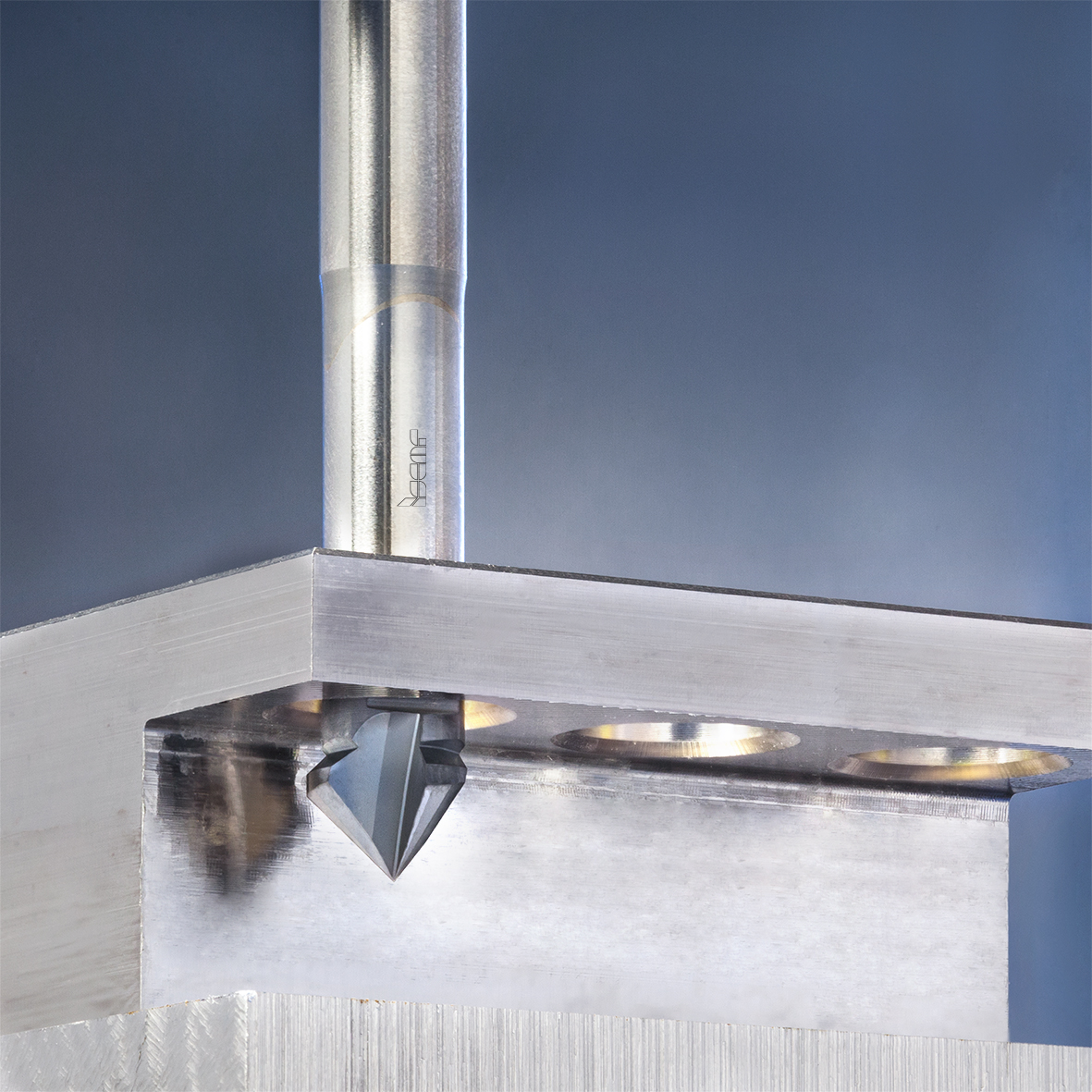
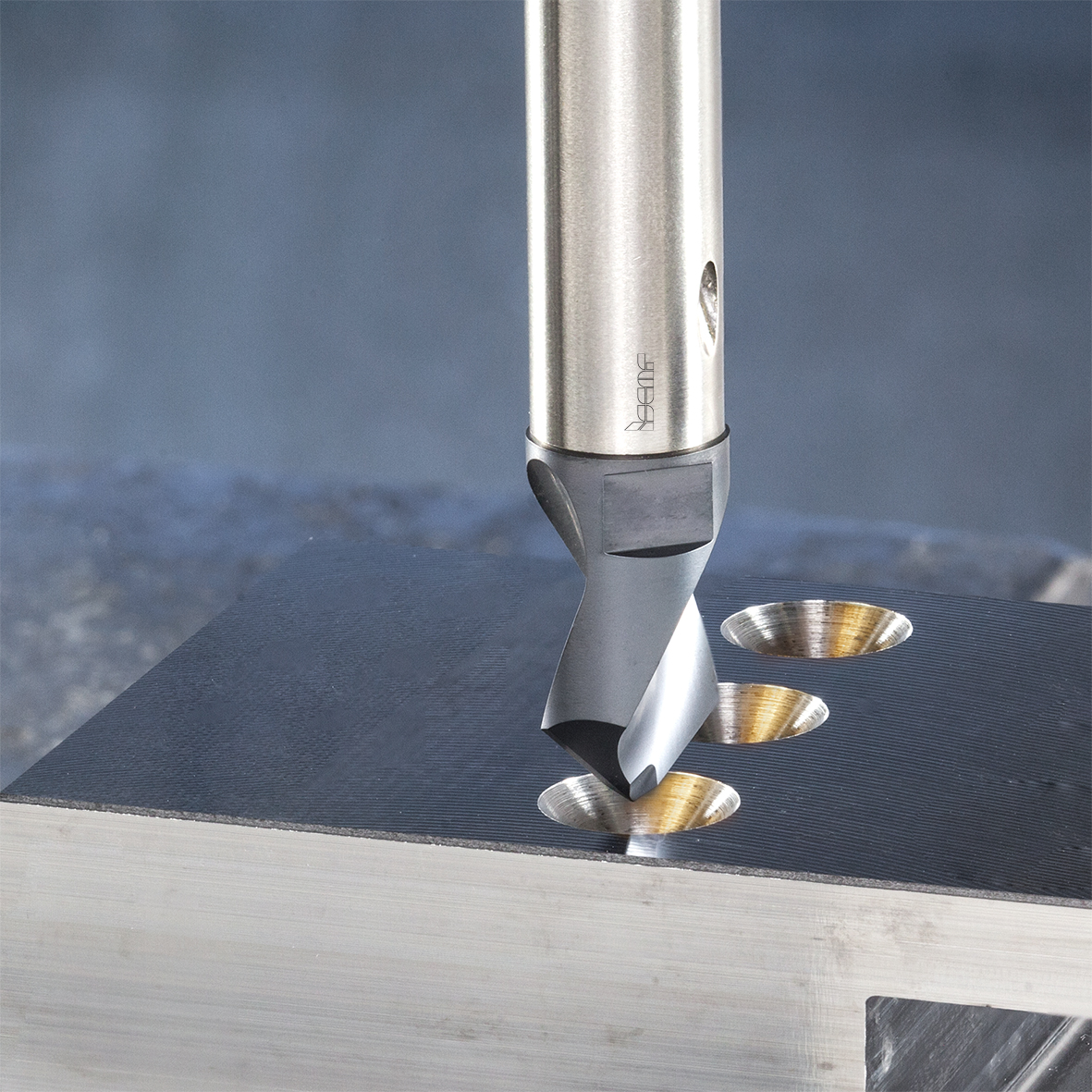
MM HCD two-flute heads stand tall above other MULTI-MASTER hole making products. These extremely versatile heads are made with various point angles - 60, 80, 90, 100 and 120 degrees which ensure a wide range of applications such as center drilling, spot drilling, hole chamfering and countersinking. They enable conical holes for countersunk screws, bolts, and rivets according to ISO/DIN/ANSI standards in solid material. If the workpiece is pre-drilled, countersinking efficiency can be improved by using multi-flute MM EDF heads that increase productivity in chamfering operations. When chamfering or deburring the back side of a hole, MULTI-MASTER double-sided chamfering heads are the solution.
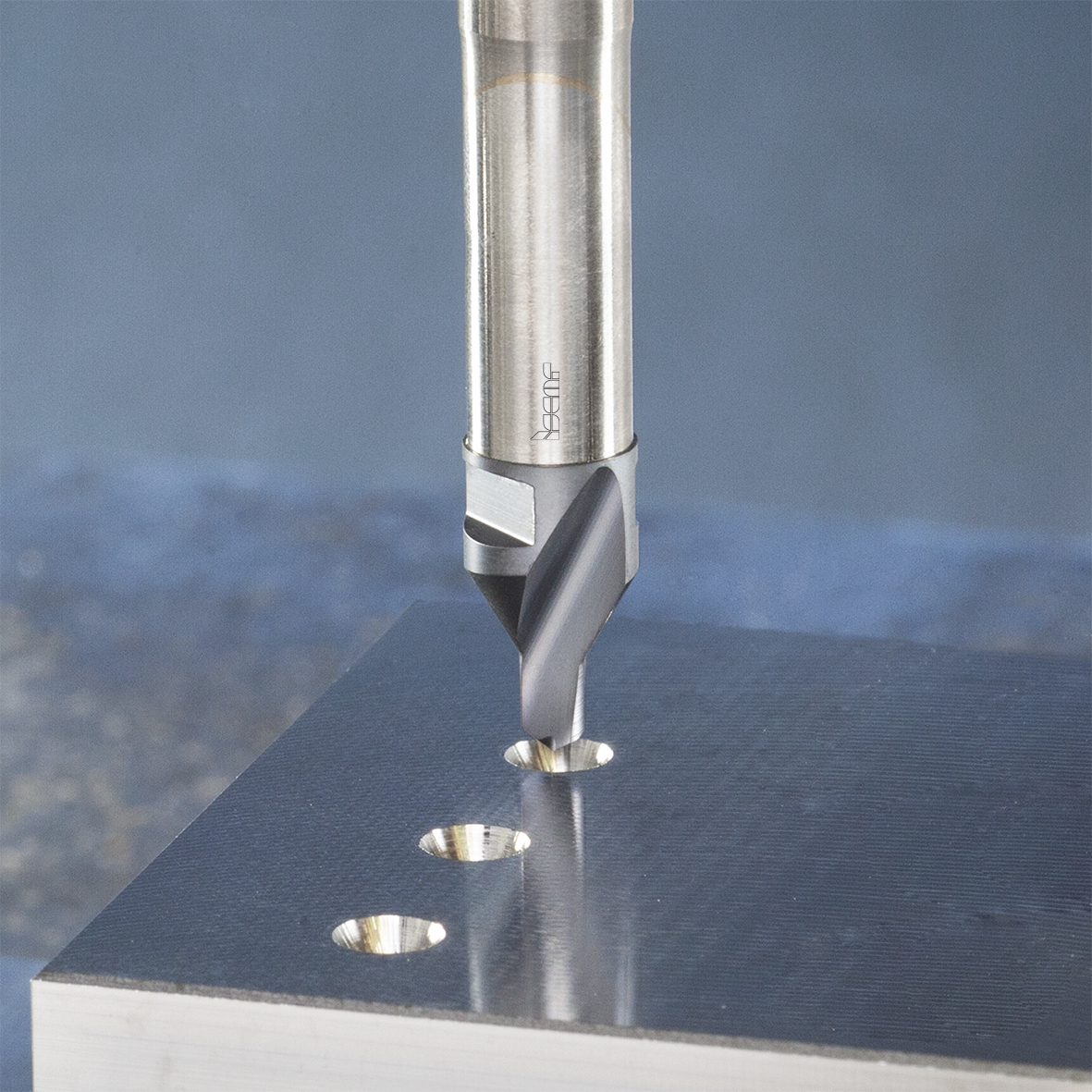
Center drilling is one of the most common holemaking operations. Typical tools that perform this task are called center drills. Highspeed steel double sided center drills have been the common tools used over the past years to achieve low cost solutions. ISCAR's MULTI-MASTER new center drilling heads have won undeniable popularity by providing increased tool life and productivity, even under strenuous cutting conditions. NC spot drills are also commonly used tools. Characterized by their small cutting depth of cut, these tools are primarily used on CNC machines for creating pre-holes that allow precise drilling without the use of guide bushings. For machining shallow holes, the MULTI-MASTER line has great advantages with NC spot drilling heads. A thin web at the head point prevents 'drill walking' during the machining operations. In addition, as a result of the 90-degree point angle the heads can be applied to hole chamfering.
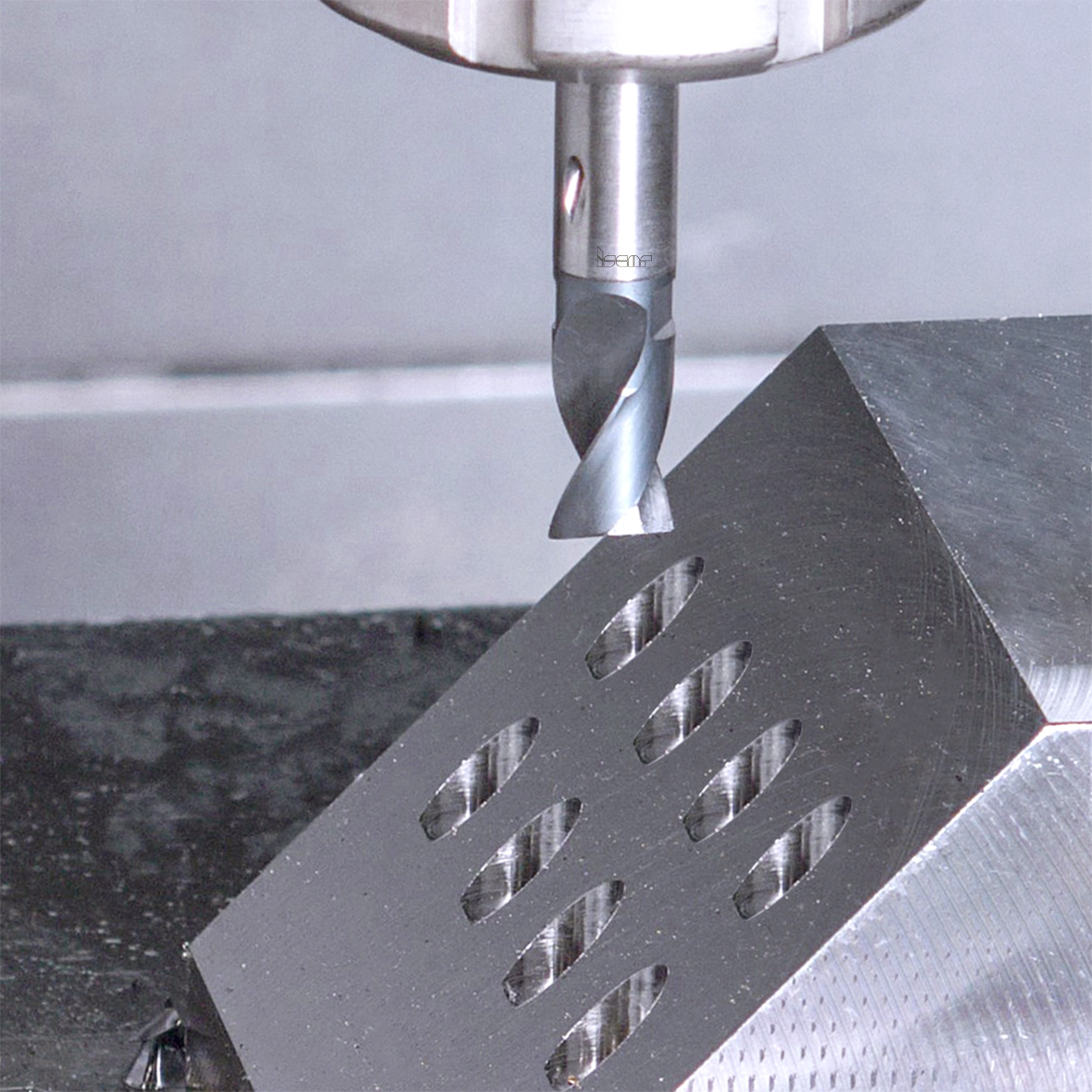
Flat bottom holes are commonly created in many applications. Such holes are needed for seats of springs, sockets of screw heads or the ports of washers. The simple way to produce these holes is by drilling with flat bottom drills. If the drilling depth does not exceed 1.2 times the length of a hole diameter, MULTI-MASTER provides two-flute heads. The heads are suitable for drilling holes on slanted surfaces, featuring versatile cutting geometry, which allows machining most engineering materials. Over recent decades, MULTI-MASTER has quickly expanded its field of use and established itself as an effective tool for holemaking as well. ISCAR's engineering design concept that features over 40,000 tool options has anchored itself to become much more than a milling tool line. It now features many more options for drilling with ISCAR's ‘No Setup time’ phenomenon to assure fast indexing and minimum machine downtime.